
The sacred is already here.
We color the space with intention.
We share it through grace.
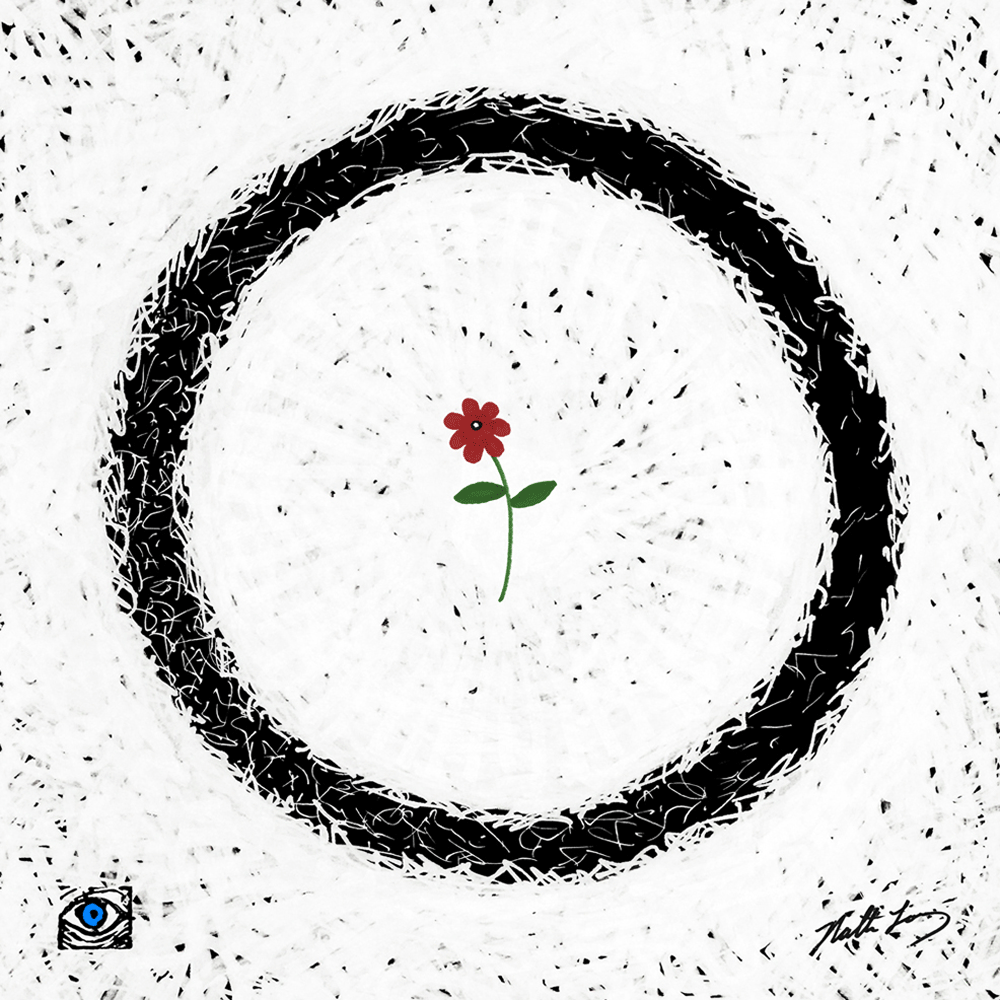
If everything is sacred, why do we create sacred spaces?
At first, this seems like a contradiction. If the sacred already exists all around us, what are we trying to create? Sacred space is not about making something sacred, but about becoming aware of the sacredness that is already present.
The challenge comes when we begin to believe that we can create, define, or control sacredness itself. In that effort, we can unintentionally create boundaries, expectations, and even dogma around something that cannot be fully contained. Sacred space is not about deciding what is sacred and what is not. It is about learning to recognize, honor, and participate in the sacredness that moves through all things.
Creating sacred space, then, is less about changing a place and more about changing our relationship with it. It is a deliberate shift in attention. We stop standing apart from the moment and become part of it. Whether we are with another person, a group, or alone, sacred space begins when we intentionally arrive.
Holding space for another person is one expression of sacred space. It means giving someone your full attention without trying to fix, direct, or compare. Listen completely. Make eye contact. Let go of the need to solve, compare, or tell your own story. Allow another person’s experience to be exactly what it is. When people feel seen, believed, and safe, they often discover their own way forward without our having to provide it.
Holding space for a group asks for something different. It means creating an environment where people feel welcomed, respected, and safe enough to participate. It requires awareness, compassion, and a willingness to protect the group’s balance when needed. It also requires humility. We cannot hold every space forever, nor should we. Sometimes the best thing we can do is invite others to help carry it.
Not every sacred space requires us to remain within it. Sometimes our role is to prepare it with care and intention, then step aside. A quiet altar in the woods or a flag hanging from a tree can continue to hold the intention with which it was created. A piece of art or a thoughtful poem can carry that same intention, touching others long after it was made. Even a meaningful conversation or a simple, heartfelt acknowledgment can leave behind a sacred space that remains after we have walked away. People often find these spaces when they are ready, drawn not by persuasion, but by resonance.
The larger lesson is that we leave something behind far more often than we realize. Every conversation, every creation, and every place we spend time carries a measure of our intention. That is both the beauty and the responsibility of living with intention. What we leave behind can encourage healing, trust, and belonging, or it can leave fear, judgment, and distance. Sacred space is not only something we intentionally create. It is also something we are continually leaving behind.
During a recent Journey-Working meditation on Sacred Space, the group discovered it in nature, water, altars, art, relationships, vulnerability, and places where we feel safe. Others experienced it within the brain, heart, and physical body, or as a shift from thought into the present moment. These reflections reinforced the idea that sacred space is not simply a place, but a way of experiencing connection, intention, and presence.
One image that emerged was a thread or web connecting all things. What we say and do, whether intentional or not, can travel through that web and through time. A simple act or comment may be remembered and carried long after we are gone. Perhaps this is another way of understanding what we leave behind: that sacred space can be shared, carried, and passed forward, becoming part of something much larger than ourselves.
Creating sacred space for others begins by creating it within ourselves. Self-care is not separate from this work; it is what makes it possible. We must be willing to sit with our own thoughts and emotions without judgment before we can truly do the same for someone else. Sacred space is not reserved for ceremony. It is anywhere and everywhere, from a quiet spot in the woods to a classroom or a difficult conversation. If the world around us is already sacred, then our task is not to create sacred space, but to arrive fully enough that our presence, our spirit, and our way of being help others recognize what has always been there.
This is my journey,
— Nate Long “Owl”