
What should our relationship be to the suffering we cannot physically reach?
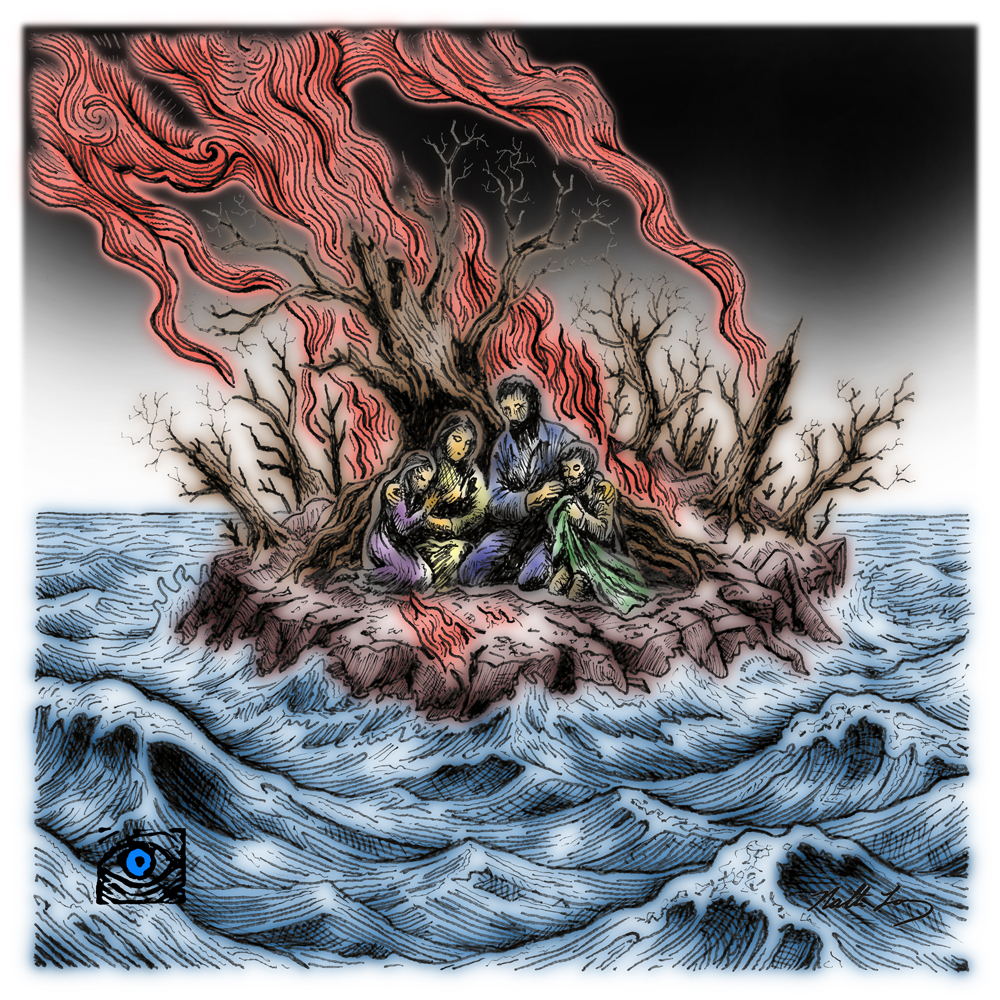
Fire walks through the forest
Water climbs beyond its banks
The earth opens
Drought holds back the rain
Roots reach deeper into darkness
The land waits
We come with open hands
Not knowing what the earth asks
We listen
We live in a world and a time when it feels like there are tragedies everywhere. Floods in Nepal and Texas, fires in Europe, Oregon and Canada, drought in Africa and the Southwestern US. We see endless streams of video posts. We become buried in snippets of horror and devastation. We are hit with emotions and a need to help. And so we ask: What should our relationship be to the suffering we cannot physically reach?
There are many ways we can physically help, even when we are far from the catastrophe. If travel and volunteering is not an option, we can donate money, supplies, and even blood. But there are other non-physical and energetic ways we can help. Whether offering to specific loved ones or to the large affected communities, we can offer prayers, create healing intentions, and hold sacred space to surround the tragedy. And perhaps the distinction between natural and human-made catastrophe is not always as clear as we imagine. Our actions can intensify the forces around us, just as disruptions within us can eventually find expression in the world around us. We can do these things without requiring any belief that we can control what is happening. Perhaps part of this discernment is recognizing how little control we actually have. We can offer, respond, and participate, but we cannot control the outcome. When we believe we can control the outcome, we move from participation into hubris.
But there’s another perspective we should consider. It may be, in some cases, that we are not meant to help at all. Perhaps we are only meant to witness. There is a temptation, particularly in spiritual work, to believe that if something is suffering, we must intervene. Yet witnessing can carry its own responsibility. Witnessing is not necessarily inaction. To witness is to allow something to be seen without immediately trying to change it. It can mean being present with what is happening, listening for what is being asked, and accepting that the answer may not be ours to determine.
This brings the idea of discernment to the forefront. When are we called to help, and when are we called to witness? And the answer is not as simple as action vs. inaction. Sometimes the most responsible thing to do is act, while the most respectful thing to do is witness. Through this discernment, we might discover that our role is neither to fix nor to withdraw, but simply to be present and available to whatever connection or assistance is appropriate.
Fires, floods, and droughts, of course, are not the only situations in our lives where this question lives. There is everyday suffering that we cannot physically repair such as illness, grief, injustice, political conflict, insecurity, and fear. And all of this may be emotionally overwhelming, or even numbing. The circumstances may change, but the question remains. What can I offer? What is mine to offer? And can I recognize the difference between being called to help and being called to witness?
“Destruction ultimately destroys itself because it is destructive by nature. Kindness can ripple for all eternity.” – insight from the Journey-Working meditation.
Perhaps our responsibility is not to save the world from its fires, floods, and droughts, but to recognize that we are part of the same living system, and become more attentive to where our presence, intention, and compassion belong.
This is my journey,
— Nate Long “Owl”
View and subscribe to my Substack
https://blueeyeart.substack.com/p/fire-flood-and-drought